Long-chain fatty acids (LCFAs) are essential lipid molecules involved in energy metabolism, membrane architecture, and cell signaling. Existing as free fatty acids or as acyl chains in complex lipids, they are widely studied in metabolic disorders, inflammatory diseases, cardiovascular disease, and cancer metabolism. Their biological effects are closely related to chain length, saturation level, and lipid class context, making precise molecular analysis important for modern lipid research. This article provides a concise overview of long-chain fatty acid classification, biosynthesis and metabolism, disease relevance, and lipidomics analysis strategies. It also provides practical guidance on selecting appropriate fatty acid analysis platforms, including LC-MS-based lipidomics and GC-MS-based free fatty acid profiling, for biomedical and life science research.
1. What Are Long-Chain Fatty Acids?
Fatty acids are fundamental building blocks of complex lipids and function as important energy substrates, structural components, and signaling precursors. Among them, long-chain fatty acids (LCFAs) represent a major class in mammalian tissues and dietary fats. Structurally, LCFAs are defined as fatty acids with a hydrocarbon chain containing 13 to 21 carbon atoms and a terminal carboxyl group (–COOH). Their molecular diversity is commonly described using the shorthand notation C:D n-x, where C indicates the number of carbon atoms, D indicates the number of double bonds, and n-x indicates the position of the first double bond from the methyl end. For example, palmitic acid is 16:0, oleic acid is 18:1n-9, arachidonic acid is 20:4n-6, and eicosapentaenoic acid (EPA) is 20:5n-3.
1.1 SCFAs, MCFAs, LCFAs and VLCFAs
LCFAs are defined within a chain-length-based classification system. In this framework, fatty acids are generally grouped into short-chain fatty acids (SCFAs), medium-chain fatty acids (MCFAs), long-chain fatty acids (LCFAs), and very-long-chain fatty acids (VLCFAs). These chain-length differences shape how fatty acids are absorbed, transported, metabolized, and involved in biological functions.
Fatty Acid Classification by Carbon Chain Length
| Class | Typical Carbon Range | Representative Examples | Biological or Analytical Notes |
|---|---|---|---|
| Short-chain fatty acids (SCFAs) | C2–C5 | Acetic acid (2:0), propionic acid (3:0), butyric acid (4:0) | Often produced by microbial fermentation; relatively water soluble and volatile. |
| Medium-chain fatty acids (MCFAs) | C6–C12 | Caprylic acid (8:0), capric acid (10:0), lauric acid (12:0) | Absorbed and oxidized more rapidly than most LCFAs; often analyzed with dedicated GC-MS workflows. |
| Long-chain fatty acids (LCFAs) | C13–C21 | Myristic acid (14:0), palmitic acid (16:0), stearic acid (18:0), oleic acid (18:1), linoleic acid (18:2n-6), arachidonic acid (20:4n-6), EPA (20:5n-3) | Major constituents of membrane lipids and storage lipids; typically require bile salt emulsification and lipoprotein transport in dietary absorption. |
| Very-long-chain fatty acids (VLCFAs) | C22 and above | DHA (22:6n-3), behenic acid (22:0), lignoceric acid (24:0), cerotic acid (26:0) | Important in myelin, retina, skin barrier, and peroxisomal metabolism; elevated VLCFAs are clinically relevant in some peroxisomal disorders. |
1.2 Saturated, Monounsaturated, and Polyunsaturated Fatty Acids
LCFAs can also be classified by degree of unsaturation. Saturated fatty acids (SFAs) contain no carbon-carbon double bonds; palmitic acid (16:0) and stearic acid (18:0) are common examples. Monounsaturated fatty acids (MUFAs) contain one double bond; oleic acid (18:1n-9) is abundant in mammalian tissues and dietary oils. Polyunsaturated fatty acids (PUFAs) contain two or more double bonds and include linoleic acid, arachidonic acid, eicosapentaenoic acid (EPA), and other n-6 and n-3 fatty acids.
Unsaturation is not only a structural feature. The number, position, and geometry of double bonds influence membrane packing, lipid-protein interactions, oxidative susceptibility, and the production of bioactive lipid mediators. These structural differences help explain why individual LCFA species can have distinct biological effects, even when they share the same carbon chain length.
Classification of Long-Chain Fatty Acids by Degree of Unsaturation
| Fatty Acid Type | Structural Features | Common Examples | Biological Relevance |
|---|---|---|---|
| Saturated Fatty Acids (SFAs) | Contain no carbon-carbon double bonds; usually have a straight hydrocarbon chain that allows tight molecular packing. | Palmitic acid (16:0), stearic acid (18:0) | Important energy substrates and structural components of complex lipids. Elevated levels of certain SFAs, especially palmitic acid, are often associated with lipotoxic stress, inflammatory activation, and metabolic dysfunction in experimental and disease-related contexts. |
| Monounsaturated Fatty Acids (MUFAs) | Contain one carbon-carbon double bond, usually in the cis configuration, which introduces a bend in the acyl chain and affects membrane fluidity. | Oleic acid (18:1n-9), palmitoleic acid (16:1n-7) | Contribute to membrane structure, lipid storage, and metabolic regulation. Changes in MUFA abundance can reflect altered desaturase activity, lipid storage, membrane remodeling, and metabolic adaptation. |
| Polyunsaturated Fatty Acids (PUFAs) | Contain two or more carbon-carbon double bonds; include n-6 and n-3 fatty acid families. Their multiple double bonds increase structural flexibility and oxidative susceptibility. | Linoleic acid (18:2n-6), arachidonic acid (20:4n-6), eicosapentaenoic acid (EPA, 20:5n-3) | Serve as precursors for bioactive lipid mediators, including prostaglandins, leukotrienes, resolvins, and related signaling molecules. PUFA metabolism is closely related to inflammation, cardiovascular biology, neurological function, and disease mechanisms. |
2. Long-Chain Fatty Acid Biosynthesis, Modification, and Metabolic Fate
Long-chain fatty acid metabolism integrates de novo lipogenesis, exogenous fatty acid uptake, elongation, desaturation, storage, complex lipid synthesis, and β-oxidation, forming an interconnected network that determines cellular lipid composition and metabolic state (Koundouros and Poulogiannis, 2020).
2.1 De Novo Fatty Acid Synthesis
Long-chain fatty acid metabolism begins with de novo fatty acid synthesis, a cytosolic process that converts acetyl-CoA and malonyl-CoA into saturated fatty acids. This pathway is catalyzed mainly by fatty acid synthase (FASN) and primarily produces palmitate (16:0), one of the most abundant saturated LCFAs in mammalian tissues. Palmitate can be used directly for energy storage and membrane lipid synthesis, or it can serve as a precursor for other fatty acid species. Because de novo lipogenesis is closely regulated by nutritional status, insulin signaling, and cellular energy balance, altered LCFA synthesis is often associated with metabolic dysfunction and disease-related lipid remodeling.
2.2 Chain Elongation and Desaturation
After palmitate is synthesized, additional LCFA diversity is generated through chain elongation and desaturation. Elongation of fatty acid chains is mediated by ELOVL enzymes, which add two-carbon units to produce longer-chain fatty acids. Desaturation is catalyzed by enzymes such as stearoyl-CoA desaturase (SCD) and fatty acid desaturases FADS1 and FADS2, which introduce double bonds at specific positions. These reactions generate monounsaturated and polyunsaturated fatty acids with distinct structural and biological properties. Together, elongation and desaturation shape tissue-specific LCFA and VLCFA profiles and influence membrane fluidity, lipid signaling, and metabolic adaptation (Guillou et al., 2010).
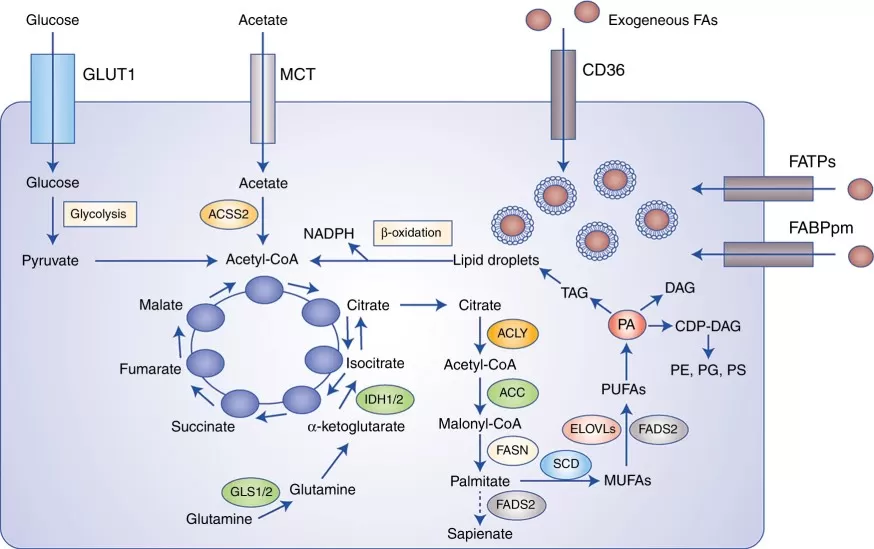
Figure 1. Overview of fatty acid sources and metabolic fates, including de novo lipogenesis, exogenous uptake, elongation, desaturation, lipid storage, and β-oxidation. Image reproduced from Koundouros and Poulogiannis, 2020, British Journal of Cancer, 122(1), 4–22.
2.3 Cellular Uptake, Activation, and Transport
LCFAs can also be obtained from dietary lipids, circulating lipoproteins, or mobilized lipid stores. Once available to cells, they enter through a combination of passive diffusion and protein-facilitated uptake involving fatty acid translocase CD36, fatty acid transport proteins (FATPs), and related transport systems. Inside the cell, hydrophobic fatty acids are bound by fatty acid-binding proteins (FABPs), which improve cytosolic solubility and guide fatty acids toward different metabolic destinations (Furuhashi and Hotamisligil, 2008). Before further metabolism, fatty acids are activated to fatty acyl-CoA esters by acyl-CoA synthetases, committing them to beta-oxidation, lipid synthesis, remodeling, or signaling pathways.
2.4 Oxidation, Lipid Remodeling, and Signaling
Activated long-chain acyl-CoAs can be directed toward energy production or complex lipid synthesis. For mitochondrial beta-oxidation, long-chain acyl-CoAs require the carnitine shuttle, in which CPT1, the carnitine-acylcarnitine translocase, and CPT2 coordinate transport into the mitochondrial matrix. Fatty acids with very long chains are often shortened first in peroxisomes before further oxidation. In parallel, LCFAs can be incorporated into triacylglycerols, phospholipids, cholesteryl esters, and sphingolipids. Polyunsaturated fatty acids also serve as precursors of bioactive lipid mediators, including eicosanoids and specialized pro-resolving mediators, linking LCFA metabolism with inflammation, vascular biology, and tissue repair (Calder, 2015).
3. Long-Chain Fatty Acids in Disease Research
Long-chain fatty acids are closely connected to disease biology because they participate in energy storage, membrane remodeling, inflammatory signaling, and lipid mediator production. Changes in LCFA abundance or composition are often observed in metabolic, cardiovascular, neurological, and cancer-related studies.
3.1 Metabolic and Cardiovascular Diseases
LCFA metabolism is strongly linked to metabolic homeostasis. In obesity, insulin resistance, type 2 diabetes, and fatty liver disease, increased fatty acid flux from adipose tissue, enhanced hepatic de novo lipogenesis, and impaired lipid oxidation can contribute to lipid accumulation in liver, muscle, and other metabolic tissues. Excess saturated fatty acids, particularly palmitate, are often associated with lipotoxic stress, mitochondrial dysfunction, endoplasmic reticulum stress, and inflammatory activation. In metabolic dysfunction-associated fatty liver disease, hepatic triglyceride accumulation is driven by multiple fatty acid sources, including circulating free fatty acids, de novo lipogenesis, and dietary lipids (Loomba et al., 2021).
LCFAs are also relevant to cardiovascular research. Saturated and unsaturated fatty acids influence plasma lipid profiles, endothelial biology, inflammatory tone, and the production of lipid-derived signaling molecules. Omega-3 polyunsaturated fatty acids such as EPA and DHA have been widely studied for their roles in triglyceride regulation and inflammation-associated cardiovascular pathways. However, clinical outcomes vary across studies, depending on dosage, formulation, patient population, and endpoint selection (Abdelhamid et al., 2020).
3.2 Neurological Function and Neuroinflammation
Fatty acids are essential for the nervous system, where they contribute to membrane organization, synaptic activity, myelin structure, and inflammatory regulation. Polyunsaturated fatty acids are especially important because their flexible acyl chains influence membrane dynamics and because they serve as precursors for lipid mediators involved in neuroimmune signaling. DHA and EPA have been widely examined in studies of cognitive aging, neuroinflammation, and neurodegenerative disease, although human evidence is complex and depends on disease stage, baseline nutritional status, and study design (Alex et al., 2020).
Recent research has also highlighted the importance of fatty acid-derived specialized pro-resolving mediators, including resolvins, protectins, and maresins. These molecules are produced from omega-3 polyunsaturated fatty acids and participate in the active resolution of inflammation rather than simply blocking inflammatory initiation (Chiang and Serhan, 2020).
3.3 Cancer Metabolism and Tumor-Associated Inflammation
Cancer cells frequently reshape fatty acid metabolism to support rapid growth and survival. Increased fatty acid synthesis supplies acyl chains for membrane biogenesis, while altered uptake, storage, and oxidation help tumor cells adapt to nutrient stress and changing microenvironments. Enzymes involved in de novo lipogenesis and desaturation, such as FASN and SCD, are often investigated because they influence membrane composition, signaling lipid availability, and cellular stress responses (Koundouros and Poulogiannis, 2020).
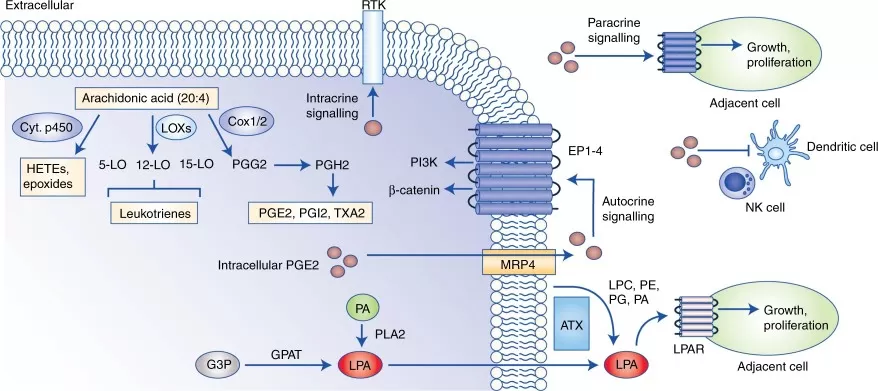
Figure 2. Remodelling of the tumour microenvironment by bioactive lipids. Image reproduced from Koundouros and Poulogiannis, 2020, British journal of cancer, 122(1), 4–22.
LCFA-derived lipid mediators also connect cancer metabolism with inflammation. Arachidonic acid can be converted into prostaglandins, leukotrienes, and related eicosanoids that participate in inflammatory and proliferative signaling, while omega-3-derived specialized pro-resolving mediators are involved in inflammation resolution pathways (Chiang and Serhan, 2020).
4. Analytical Strategies for Long-Chain Fatty Acid Profiling
Accurate LCFA analysis depends on matching the analytical workflow to the biological question. Free fatty acid profiling, total fatty acid composition analysis, and intact lipidomics provide different layers of information, from dynamic non-esterified fatty acid pools to lipid-class-specific remodeling. The following sections summarize key considerations in sample preparation, GC-MS and LC-MS/MS platform selection, and structural interpretation of LCFA data.
4.1 Free Fatty Acids vs. Total Fatty Acid Profiling
A central analytical decision is whether the study targets free fatty acids, total fatty acids, or intact lipid species. Free fatty acids represent a smaller but highly dynamic pool. Their levels can change during sample handling because of lipase activity, oxidation, hemolysis, or delayed quenching. Accurate free fatty acid analysis therefore requires rapid sample stabilization, appropriate storage, and isotope-labeled internal standards.
Total fatty acid profiling measures fatty acyl chains released from complex lipids after hydrolysis or transesterification. This approach is useful for dietary, nutritional, and broad compositional questions, but it loses information about the original lipid class. Intact lipidomics, by contrast, can distinguish whether a fatty acyl chain occurs in phosphatidylcholine, phosphatidylethanolamine, triacylglycerol, cholesteryl ester, or another lipid class. These approaches answer different biological questions and should not be treated as interchangeable.
4.2 Extraction and Sample Preparation
Common lipid extraction methods include Folch extraction, Bligh-Dyer extraction, and MTBE-based extraction. Folch and Bligh-Dyer methods use chloroform-methanol systems and remain foundational for total lipid recovery. MTBE-based extraction is widely used in lipidomics because it supports efficient lipid recovery, favorable phase separation, and high-throughput workflows.
Internal standards are essential. For quantitative LCFA work, isotope-labeled standards should cover a range of chain lengths and unsaturation states. A single internal standard cannot fully correct for extraction recovery, matrix effects, chromatographic behavior, and ionization differences across all fatty acids. For absolute quantification, calibrators, matrix-matched quality control samples, and clearly defined reporting units are required.
4.3 GC-MS, LC-MS/MS, and Platform Selection
GC-FID and GC-MS remain robust platforms for total fatty acid composition, especially after conversion to fatty acid methyl esters (FAMEs). These methods are well suited for chain-length and degree-of-unsaturation profiling, and they remain common in nutrition and microbiome-related fatty acid studies. However, precise assignment of double-bond position or intact lipid class information typically requires additional derivatization, standards, or complementary MS workflows.
LC-MS/MS is especially useful for intact lipidomics and targeted lipid-class analysis. In reversed-phase LC, retention generally increases with acyl-chain length and decreases with increasing unsaturation for fatty acids of comparable chain length. Negative-mode electrospray ionization is commonly used for free fatty acids because the carboxylate anion forms a strong [M-H]- signal. For intact lipids, ionization mode and adduct strategy depend on lipid class, head group, and instrument configuration.
4.4 Isomer Resolution and Double-Bond Localization
Isomer resolution is one of the most important limitations in fatty acid lipidomics. Conventional collision-induced dissociation often confirms the fatty acyl composition but does not reliably identify double-bond position. As a result, routine LC-MS/MS may distinguish 20:5 from 20:4 but may not unambiguously determine whether a 20:5 fatty acyl chain belongs to a specific omega series without standards, retention-time evidence, or specialized fragmentation.
Advanced approaches can improve structural confidence. Ozone-induced dissociation, ultraviolet photodissociation, Paterno-Buchi derivatization, epoxidation-based workflows, and oxygen attachment dissociation can provide double-bond position information. A recent Nature Communications study demonstrated that retention-time information from routine reversed-phase LC-MS/MS can be used computationally to assign chain-specific C=C positions in complex lipids, when supported by experimentally verified retention-time databases and suitable chromatographic conditions (Lamp et al., 2025).
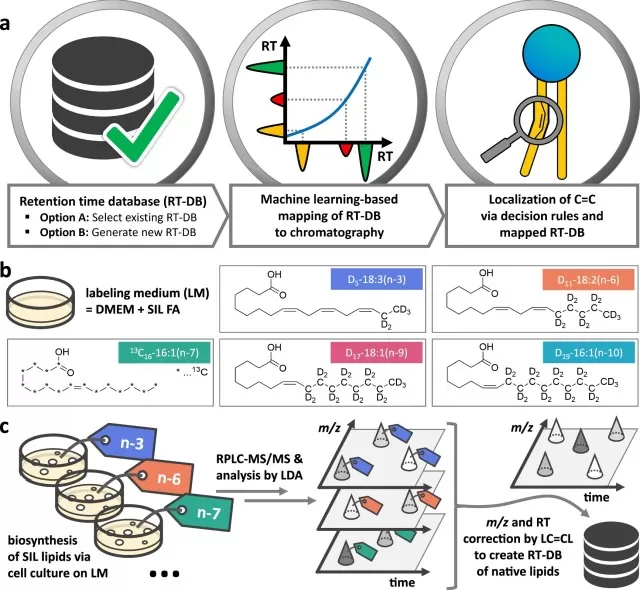
Figure 3. The LC=CL analysis workflow includes RT-DB generation by SIL experiments. Image reproduced from Lamp et al., 2025, Nature communications, 16(1), 7277.
5. Frequently Asked Questions About Long-Chain Fatty Acids
1. What are long-chain fatty acids?
Long-chain fatty acids (LCFAs) are fatty acids with relatively long hydrocarbon chains, commonly defined as containing 13 to 21 carbon atoms. They can exist as free fatty acids or as acyl chains within complex lipids such as phospholipids, triacylglycerols, cholesteryl esters, and sphingolipids. LCFAs play important roles in energy metabolism, membrane structure, and lipid-mediated signaling.
2. What is the difference between saturated and unsaturated long-chain fatty acids?
Saturated long-chain fatty acids contain no carbon-carbon double bonds, while unsaturated long-chain fatty acids contain one or more double bonds. Monounsaturated fatty acids have one double bond, whereas polyunsaturated fatty acids have two or more. These structural differences influence membrane fluidity, oxidative stability, lipid signaling, and the biological functions of individual fatty acid species.
3. Why are long-chain fatty acids important in disease research?
Long-chain fatty acids are closely related to metabolic regulation, inflammation, cardiovascular biology, neurological function, and cancer metabolism. Changes in LCFA synthesis, uptake, oxidation, or lipid mediator production can reflect disease-associated metabolic remodeling. For this reason, LCFA profiling is widely used in studies of metabolic disorders, fatty liver disease, cardiovascular disease, neuroinflammation, and tumor metabolism.
4. How are long-chain fatty acids analyzed in lipidomics?
Long-chain fatty acids can be analyzed using mass spectrometry-based methods, including LC-MS/MS lipidomics and GC-MS-based fatty acid profiling. LC-MS/MS is commonly used for complex lipidomics and targeted fatty acid analysis, while GC-MS is widely used for free fatty acid profiling and fatty acid composition analysis after derivatization. Platform selection depends on whether the study focuses on free fatty acids, total fatty acids, or lipid-class-specific fatty acid changes.
5. What samples can be used for long-chain fatty acid analysis?
Long-chain fatty acid analysis can be applied to common biological matrices such as plasma, serum, tissues, cells, feces, and culture-related samples. The appropriate sample type depends on whether the study targets circulating free fatty acids, tissue lipid metabolism, total fatty acid composition, or lipid-class-specific remodeling. Proper collection, rapid stabilization, and low-temperature storage are important for reliable fatty acid profiling.
How MetwareBio Supports Fatty Acid Lipidomics Research
MetwareBio is a mass spectrometry-driven multi-omics service provider with extensive experience in metabolomics, lipidomics, proteomics, and integrated multi-omics analysis. For long-chain fatty acid research, MetwareBio offers complementary analytical solutions based on different study goals.
GC-MS-based free fatty acid analysis supports targeted profiling of medium-chain, long-chain, and very-long-chain free fatty acids, while total fatty acid analysis is suitable for evaluating overall fatty acid composition. For broader lipid research, LC-MS-based quantitative lipidomics supports wide lipid-class coverage, including fatty acyls, glycerolipids, glycerophospholipids, sphingolipids, sterol lipids, and lipid mediators, making it suitable for studies of lipid remodeling, metabolic regulation, inflammatory signaling, and biomarker discovery.
MetwareBio provides end-to-end support from experimental design and sample preparation guidance to mass spectrometry detection, quality control, data analysis, and report delivery. Fatty acid and lipidomics data can also be integrated with transcriptomics, proteomics, metabolomics, or spatial omics to support mechanism-focused research.
Interested in fatty acid or lipidomics analysis for your research? Please do not hesitate to contact us to discuss your sample type, project goals, and suitable analytical workflow.
Contact UsRead More: Lipid Biology, Fatty Acid Research & Lipidomics
Explore related articles on fatty acid classification, lipid structure, analytical platforms, and lipidomics workflows to deepen your understanding of lipid biology and mass spectrometry-based analysis.
A comprehensive overview of fatty acid classification by chain length and saturation, covering biosynthesis pathways and the roles of specific fatty acid types in metabolic and inflammatory disease contexts. Ideal background reading for understanding how LCFAs fit within the broader fatty acid landscape.
A focused look at saturated fatty acids — their structural characteristics, dietary contributions, and associations with lipotoxicity, inflammation, and metabolic dysfunction. This article provides useful context for interpreting elevated palmitate and stearate levels in lipidomics datasets.
Eicosanoids are bioactive lipid mediators derived from polyunsaturated fatty acids including arachidonic acid and EPA. This guide covers their biosynthesis routes, roles in inflammatory and pro-resolving signaling, and the mass spectrometry methods used to quantify them in biological samples.
An accessible introduction to the major lipid classes — from glycerophospholipids and sphingolipids to sterol lipids and fatty acyls. Understanding lipid class context is essential for interpreting where long-chain fatty acyl chains appear in intact lipidomics data.
A practical step-by-step guide to lipidomics data interpretation, covering normalization, quality control, differential lipid species identification, and pathway context. This article helps researchers move from raw LC-MS/MS output to biologically meaningful conclusions about LCFA remodeling.
While LCFAs dominate membrane lipids and signaling, short-chain fatty acids play critical roles in gut microbiome biology and systemic metabolism. Comparing SCFA and LCFA biology helps clarify how chain length determines metabolic fate, transport mechanisms, and physiological function.
References
- Calder, P. C. (2015). Marine omega-3 fatty acids and inflammatory processes: Effects, mechanisms and clinical relevance. Biochimica et Biophysica Acta, 1851(4), 469–484. https://doi.org/10.1016/j.bbalip.2014.08.010
- Furuhashi, M., & Hotamisligil, G. S. (2008). Fatty acid-binding proteins: Role in metabolic diseases and potential as drug targets. Nature Reviews Drug Discovery, 7(6), 489–503. https://doi.org/10.1038/nrd2589
- Guillou, H., Zadravec, D., Martin, P. G. P., & Jacobsson, A. (2010). The key roles of elongases and desaturases in mammalian fatty acid metabolism: Insights from transgenic mice. Progress in Lipid Research, 49(2), 186–199. https://doi.org/10.1016/j.plipres.2009.12.002
- Lamp, L. M., Murawska, G. M., Argus, J. P., Armando, A. M., Talmazan, R. A., Puhringer, M., Rampler, E., Quehenberger, O., Dennis, E. A., & Hartler, J. (2025). Computationally unmasking each fatty acyl C=C position in complex lipids by routine LC-MS/MS lipidomics. Nature Communications, 16, 7277. https://doi.org/10.1038/s41467-025-61911-x
- Abdelhamid, A. S., Brown, T. J., Brainard, J. S., Biswas, P., Thorpe, G. C., Moore, H. J., Deane, K. H. O., AlAbdulghafoor, F. K., Summerbell, C. D., Worthington, H. V., Song, F., & Hooper, L. (2020). Omega-3 fatty acids for the primary and secondary prevention of cardiovascular disease. Cochrane Database of Systematic Reviews, 2020(3), CD003177. https://doi.org/10.1002/14651858.CD003177.pub5
- Alex, A., Abbott, K. A., McEvoy, M., Schofield, P. W., & Garg, M. L. (2020). Long-chain omega-3 polyunsaturated fatty acids and cognitive decline in non-demented adults: a systematic review and meta-analysis. Nutrition reviews, 78(7), 563–578. https://doi.org/10.1093/nutrit/nuz073
- Chiang, N., & Serhan, C. N. (2020). Specialized pro-resolving mediator network: An update on production and actions. Essays in Biochemistry, 64(3), 443–462. https://doi.org/10.1042/EBC20200018
- Koundouros, N., & Poulogiannis, G. (2020). Reprogramming of fatty acid metabolism in cancer. British Journal of Cancer, 122, 4–22. https://doi.org/10.1038/s41416-019-0650-z
- Loomba, R., Friedman, S. L., & Shulman, G. I. (2021). Mechanisms and disease consequences of nonalcoholic fatty liver disease. Cell, 184(10), 2537–2564. https://doi.org/10.1016/j.cell.2021.04.015