Plant trait discovery is moving beyond phenotype-only observation. Yield, male fertility, grain size, kernel texture, nutritional value, and quality traits often reflect interactions among genetic variation, gene expression, metabolites, hormones, proteins, lipids, and environmental response. Plant transcriptomics helps identify candidate genes and expression modules, while metabolomics provides biochemical phenotypes that can be integrated with GWAS, mGWAS, QTL mapping, and trait data. With MetwareBio’s current plant transcriptomics promotion at $99/sample, researchers can begin with RNA-seq as an accessible first layer and expand to multi-omics when deeper genotype-to-phenotype interpretation is needed. This article explains how multi-omics supports trait discovery, candidate prioritization, and breeding-relevant marker interpretation.
Why Trait Discovery Needs More Than Phenotype Data
Phenotyping is essential, but phenotype alone rarely explains mechanism. A high-yielding line may differ in photosynthesis, tuber formation, reproductive development, source-sink allocation, or stress adaptation. A grain quality trait may reflect starch metabolism, amino acid metabolism, carotenoids, lipids, or developmental timing. A fertility trait may involve both gene regulation and biochemical support for reproductive tissue development.
This is the genotype-to-phenotype gap: DNA variation can be associated with a trait, but the biological route from genotype to phenotype is often indirect. Transcriptomics, metabolomics, proteomics, lipidomics, hormone profiling, and phenotyping provide intermediate layers that help researchers understand which genes, compounds, pathways, or molecular modules are most likely to matter.
Recent discussions of multi-omics-augmented GWAS emphasize that integrating genomics, transcriptomics, proteomics, and metabolomics can help decipher complex plant traits and support candidate prioritization for crop improvement (Mangi et al., 2025).
From Phenotype to Mechanism: What Each Omics Layer Adds
A useful trait discovery project starts with the trait and then selects the molecular layers that can explain it. The goal is not to collect every possible omics dataset. The goal is to choose the layers that can connect phenotype, regulation, biochemical state, and genetic variation.
Omics layers and their value in plant trait discovery
| Layer | What it tells researchers | When it is useful |
|---|---|---|
| Phenotype | What changed in growth, yield, fertility, grain quality, texture, or nutrition | Always required as the biological anchor |
| Genomics / GWAS / QTL | Where trait-associated loci may be located | Breeding populations and natural variation panels |
| Transcriptomics | Which genes or modules are active in relevant tissues or stages | Candidate gene discovery and pathway screening |
| Metabolomics | Which biochemical phenotypes changed | Quality, stress, fertility, metabolic pathway changes, and specialized metabolite traits |
| Lipidomics / proteomics | Functional molecules, structures, and pathway proteins | Traits involving membranes, storage tissues, or protein-level mechanisms |
| Multi-omics integration | Which genes, metabolites, loci, and pathways should be prioritized | Complex traits and follow-up validation planning |
How Plant RNA-seq Supports Trait Discovery
RNA-seq is useful when researchers need to identify candidate genes or expression patterns associated with a trait. In breeding-oriented studies, transcriptomics can compare high-trait and low-trait lines, parents and hybrids, tissues, developmental stages, or treatment groups.
Transcriptomics can reveal candidate genes, co-expression modules, hub genes, tissue-specific expression, developmental timing, and pathway enrichment. It is especially useful when a phenotype is known, but the regulatory mechanism is unclear.
Plant RNA-seq is also a practical first layer for pilot studies. If RNA-seq points to a compound-related pathway, metabolomics can be added. If RNA-seq points to hormone pathways, plant hormone profiling may be appropriate. If trait-associated loci are already known, expression data can help prioritize candidate genes inside those regions.
How Metabolomics Adds Breeding-Relevant Evidence
Metabolites can serve as biochemical phenotypes that sit closer to visible traits than gene expression alone. In crop breeding research, metabolomics helps explain trait variation related to quality, nutrition, stress tolerance, fertility, growth, and tissue structure by measuring the biochemical changes behind the phenotype.
Metabolomics is most valuable when a trait involves compound accumulation, metabolic pathway changes, hormone balance, or structural biochemical features. When integrated with RNA-seq, phenotype data, GWAS, QTL mapping, or mGWAS, metabolite data can help connect candidate genes or loci with measurable biochemical changes and prioritize pathways for follow-up validation.
Different traits require different biochemical readouts. A fertility project may focus on reproductive tissue metabolites and plant hormone profiling, while a kernel texture project may require lipid-related evidence or specialized metabolite analysis. The table below summarizes common plant traits and metabolite readouts that can help connect phenotype, gene expression, and biochemical mechanism.
Table: Common Plant Traits and Useful Metabolite Readouts for Multi-Omics Breeding
| Trait or breeding question | Useful metabolite or biochemical readouts | Recommended omics strategy | Why it matters |
|---|---|---|---|
| Yield and heterosis | Primary metabolites, tuber or seed metabolites, hormones, yield-associated metabolic signatures | Genomics + RNA-seq + metabolomics + phenotype | Helps connect genetic effects with gene regulation, biochemical traits, and yield components |
| Male fertility | Flavonoids, sugars, amino acids, hormones, reproductive tissue metabolites | RNA-seq + metabolomics + plant hormones | Supports interpretation of pollen development, fertility regulation, and reproductive stress sensitivity |
| Grain size | Flavonoid glycosides, auxin-related metabolites, lignin-related compounds, carbon flux-related metabolites | RNA-seq + metabolomics | Links growth traits with metabolic pathway changes and hormone-related regulation |
| Kernel texture | Carotenoids, lipids, membrane-associated metabolites | RNA-seq + lipidomics/metabolomics | Helps explain structural traits involving amyloplasts, membranes, and storage tissues |
| Nutritional quality | Amino acids, flavonoids, phenols, carotenoids, vitamins, specialized metabolites | RNA-seq + targeted metabolomics | Connects nutritional traits with candidate biosynthetic genes |
| Breeding population marker discovery | Trait-associated metabolites, mQTL-linked metabolites, pathway metabolites | GWAS/mGWAS + transcriptomics + metabolomics | Helps prioritize candidate genes, loci, metabolites, and breeding-relevant pathways |
GWAS, mGWAS, eQTL, and Co-Expression Networks in Trait Discovery
GWAS and QTL mapping can identify genomic regions associated with a trait, but they often leave many candidate genes. Transcriptomics and metabolomics can help reduce that candidate space. Expression quantitative trait loci (eQTL) link genetic variation to gene expression. Metabolite GWAS (mGWAS) links genetic variation to metabolite levels. Co-expression networks can group genes that behave together across samples or traits.
When these approaches converge, the evidence becomes more persuasive. A candidate gene is stronger if it lies near a trait-associated locus, is differentially expressed in the relevant tissue, belongs to a plausible pathway, correlates with a trait-related metabolite, and matches the phenotype pattern. This is the practical value of multi-omics for breeding-relevant discovery.
How to Prioritize Candidate Genes and Breeding-Relevant Markers
A candidate signal becomes more convincing when multiple evidence layers point in the same direction. Researchers can use the following logic to prioritize candidates:
- Does the candidate gene fall within or near a trait-associated locus?
- Is it expressed in the tissue and developmental stage where the trait forms?
- Is it differentially expressed between contrasting lines, parents, hybrids, or trait groups?
- Is it connected to trait-related metabolites or biochemical phenotypes?
- Does it belong to a plausible pathway such as starch metabolism, flavonoid biosynthesis, hormone regulation, fertility, or lipid metabolism?
- Does the candidate correlate with phenotype data across enough biological samples?
This approach does not replace genetic validation, fine mapping, transformation, or breeding trials. It helps researchers decide which genes, metabolites, and pathways deserve the next round of experimental attention.
Published Application Examples: Trait Discovery with Multi-Omics
Case 1: Potato heterosis, male fertility, and yield
The potato heterosis study by Li et al. (2024) is a strong example of multi-omics trait discovery. The study generated a large dataset in diploid potato, including genomic, phenomic, transcriptomic, and metabolomic layers. The authors investigated 20,382 traits, identified 25,770 QTLs, and used gene expression data to construct a systems-genetics network for gene discovery.
A key result was the identification of a male fertility-related PME gene with a dominance heterotic effect. This matters because it moves the study beyond phenotype comparison. Transcriptomics helped connect genetic effects with active gene regulation, metabolomics contributed biochemical phenotypes, and QTL analysis placed these signals into a breeding-relevant framework.
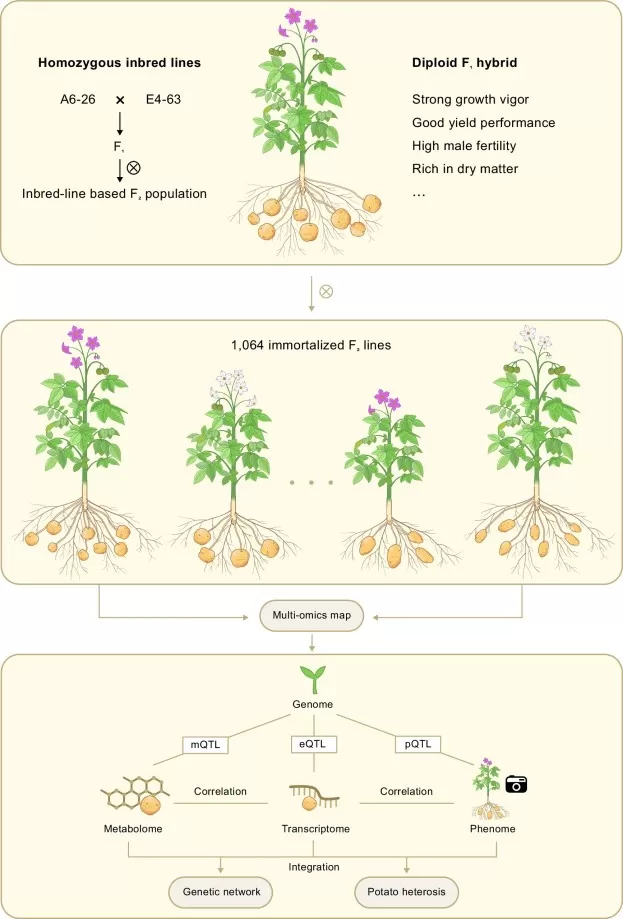
Figure 1. Multi-Omics Strategy for Potato Heterosis and Trait Discovery. Image reproduced from Li et al. (2024), Nature Communications.
Case 2: Maize kernel texture and carotenoid-related structure
Kernel texture is a complex trait with processing, storage, and nutritional importance. Wang et al. (2020) identified Ven1 as a major QTL affecting vitreous endosperm in maize. Ven1 encodes beta-carotene hydroxylase 3 and modulates carotenoid composition in the amyloplast envelope. The study connected carotenoid composition, lipid-related membrane changes, amyloplast envelope integrity, and kernel texture.
This case is important because it shows that some traits need more than RNA-seq and general metabolomics. When the phenotype involves membrane integrity, storage tissue structure, or compound localization, lipidomics, specialized metabolite analysis, protein evidence, or imaging may be needed to interpret the mechanism.
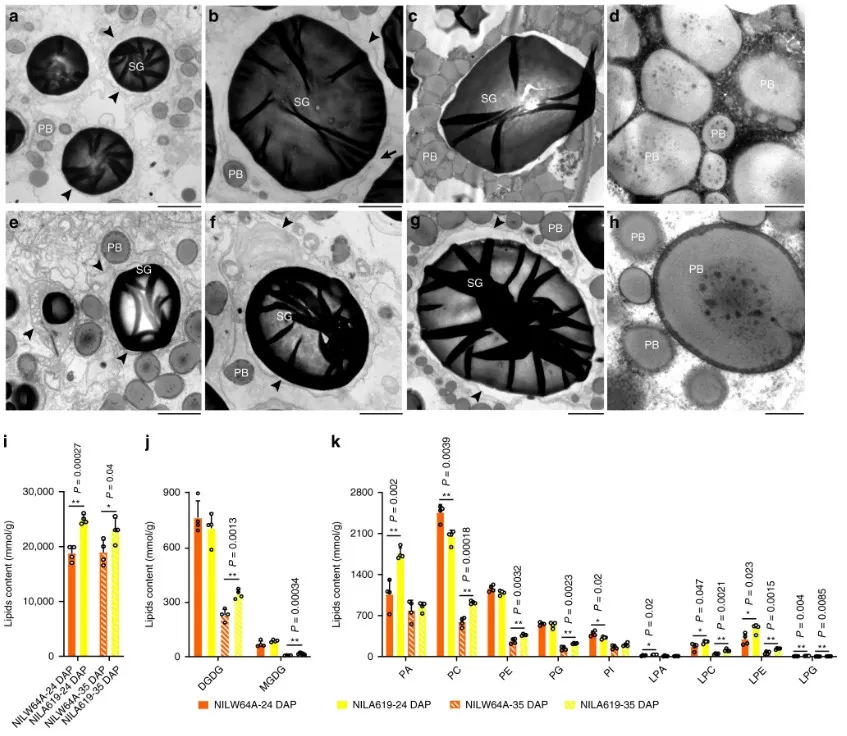
Figure 2. Amyloplast Envelope Integrity and Lipid Composition in Maize Kernel Texture. Image adapted from Wang et al. (2020), Nature Communications, licensed under CC BY 4.0.
Case 3: Rice grain size and metabolic pathway changes redirection
Dong et al. (2020) studied a UDP-glucosyltransferase, GSA1, associated with rice grain size and abiotic stress tolerance. The study linked grain size with flavonoid-mediated auxin signaling, PIN1-related regulation, and redirection of carbon flux toward flavonoid glycoside synthesis.
For trait discovery, this is a useful example because it connects an agronomic trait with metabolic pathway changes, hormone-related regulation, and stress tolerance. Metabolomics helped interpret biochemical pathway redirection, while gene-level evidence helped connect the pathway to grain development and stress-response traits.
Case 4: Nutritional and quality traits in okra and rice
Trait discovery also applies to nutritional value and quality traits. The okra genome study integrated genomic resources with transcriptome and metabolome data to explore genome evolution and high nutrient content, including secondary metabolite-related interpretation (Wang et al., 2023). In rice, Zhang et al. (2023) linked eating and cooking quality with carbohydrate and amino acid metabolism during grain filling.
These studies show that trait discovery can target yield and fertility, but also nutrition, grain quality, bioactive compounds, and processing value. The best omics strategy depends on the trait, tissue, and follow-up question.
How MetwareBio Supports Plant Trait Discovery and Multi-Omics Breeding
MetwareBio supports plant trait studies with plant RNA-seq, widely targeted metabolomics, targeted metabolomics, lipidomics, proteomics, plant hormone profiling, mGWAS, and multi-omics analysis depending on the trait question.
The current plant transcriptomics promotion at $99/sample provides an accessible starting layer for candidate gene and pathway screening. Additional omics layers can be added when the project requires biochemical phenotypes, lipid-related evidence, hormone data, protein-level evidence, or genotype-metabolite association analysis.
If you are interested in plant trait discovery and multi-omics breeding, please do not hesitate to contact us.
Selected MetwareBio-Supported Publications in Trait Discovery and Multi-Omics Breeding Research
| Literature title | Year | Sample or species | Trait area |
|---|---|---|---|
| Integrative multi-omics analysis reveals genetic and heterotic contributions to male fertility and yield in potato | 2024 | Diploid potato population | Heterosis / male fertility / yield |
| Carotenoids modulate kernel texture in maize by influencing amyloplast envelope integrity | 2020 | Maize kernel / endosperm | Kernel texture / carotenoid-related structure |
| UDP-glucosyltransferase regulates grain size and abiotic stress tolerance associated with metabolic flux redirection in rice | 2020 | Rice grain | Grain size / metabolic flux |
| The genome of okra (Abelmoschus esculentus) provides insights into its genome evolution and high nutrient content | 2023 | Okra | Nutritional traits / genome evolution |
| Improving rice eating and cooking quality by enhancing endogenous expression of a nitrogen-dependent floral regulator | 2023 | Rice tissues / grain | Grain quality |
FAQ on Plant Trait Discovery and Multi-Omics Breeding
How does transcriptomics support plant trait discovery?
Transcriptomics supports plant trait discovery by identifying genes, expression modules, and pathways associated with a phenotype. It is useful for comparing contrasting lines, developmental stages, tissues, parents, hybrids, or treatment groups to prioritize candidate regulatory signals.
Why is metabolomics useful for crop breeding research?
Metabolomics is useful because metabolites can serve as biochemical phenotypes. They help connect gene regulation with visible traits such as quality, nutritional value, stress tolerance, fertility, yield-related metabolism, and compound accumulation.
What is the genotype-to-phenotype gap in plant breeding?
The genotype-to-phenotype gap is the difficulty of explaining complex traits from DNA variation alone. Multi-omics narrows this gap by adding gene expression, metabolites, proteins, hormones, lipids, and phenotype layers that better describe the biological path from genotype to trait.
When should mGWAS be combined with transcriptomics and metabolomics?
mGWAS is useful when the project needs to connect genetic variation with metabolite traits and candidate genes. It is especially valuable for specialized metabolites, quality traits, stress tolerance, and traits where compounds serve as measurable biochemical phenotypes.
Can plant RNA-seq be used as a first step for breeding projects?
Yes. Plant RNA-seq can be used as a first step to screen candidate genes and pathways in selected tissues or contrasting phenotypes. Larger projects can then add metabolomics, lipidomics, hormones, proteomics, GWAS, or mGWAS depending on the trait.
Read More: Advancing Trait Discovery with Multi-Omics and Breeding Tools
These articles cover the transcriptomics services, metabolomics strategies, and multi-omics integration methods that support plant trait discovery, candidate gene prioritization, and crop breeding research.
Start with RNA-seq to identify candidate genes, expression modules, and pathways associated with your trait. This service covers library preparation, sequencing, and bioinformatics analysis for plant transcriptomics studies.
Understand the advantages of multi-omics integration for complex trait research. This article covers how combining genomics, transcriptomics, proteomics, and metabolomics helps decipher plant traits and support crop improvement.
Weighted Gene Co-expression Network Analysis (WGCNA) is a key method for identifying co-expression modules and hub genes in trait discovery. This guide covers the analysis workflow, interpretation, and available online tools.
Three-layer multi-omics integration connects gene expression with protein abundance and metabolite accumulation. This service page explains how MetwareBio integrates data across omics layers for trait discovery.
Learn strategies for integrating proteomics and metabolomics data in trait discovery. This article covers correlation analysis, pathway mapping, and biological interpretation of multi-omics results for breeding research.
Choose the right metabolomics strategy for your trait question. This guide explains the differences between targeted, untargeted, and widely-targeted approaches and when to use each for biochemical phenotype discovery.
References
- Mangi N, et al. 2025. Multi-Omics-Augmented GWAS for Crop Improvement: From Mechanisms to Breeding. Modern Agriculture. https://onlinelibrary.wiley.com/doi/10.1002/moda.70032
- Li D, Geng Z, Xia S, et al. 2024. Integrative multi-omics analysis reveals genetic and heterotic contributions to male fertility and yield in potato. Nature Communications. https://www.nature.com/articles/s41467-024-53044-4
- Wang H, Huang Y, Xiao Q, et al. 2020. Carotenoids modulate kernel texture in maize by influencing amyloplast envelope integrity. Nature Communications. https://www.nature.com/articles/s41467-020-19196-9
- Dong N-Q, Sun Y, Guo T, et al. 2020. UDP-glucosyltransferase regulates grain size and abiotic stress tolerance associated with metabolic flux redirection in rice. Nature Communications. https://www.nature.com/articles/s41467-020-16403-5
- Wang R, et al. 2023. The genome of okra (Abelmoschus esculentus) provides insights into its genome evolution and high nutrient content. Horticulture Research. https://doi.org/10.1093/hr/uhad120
- Zhang et al. 2023. Improving rice eating and cooking quality by enhancing endogenous expression of a nitrogen-dependent floral regulator. Plant Biotechnology Journal. https://doi.org/10.1111/pbi.14160